The start-line gate drill
A ten-minute putting exercise that separates face control from green reading and speed.
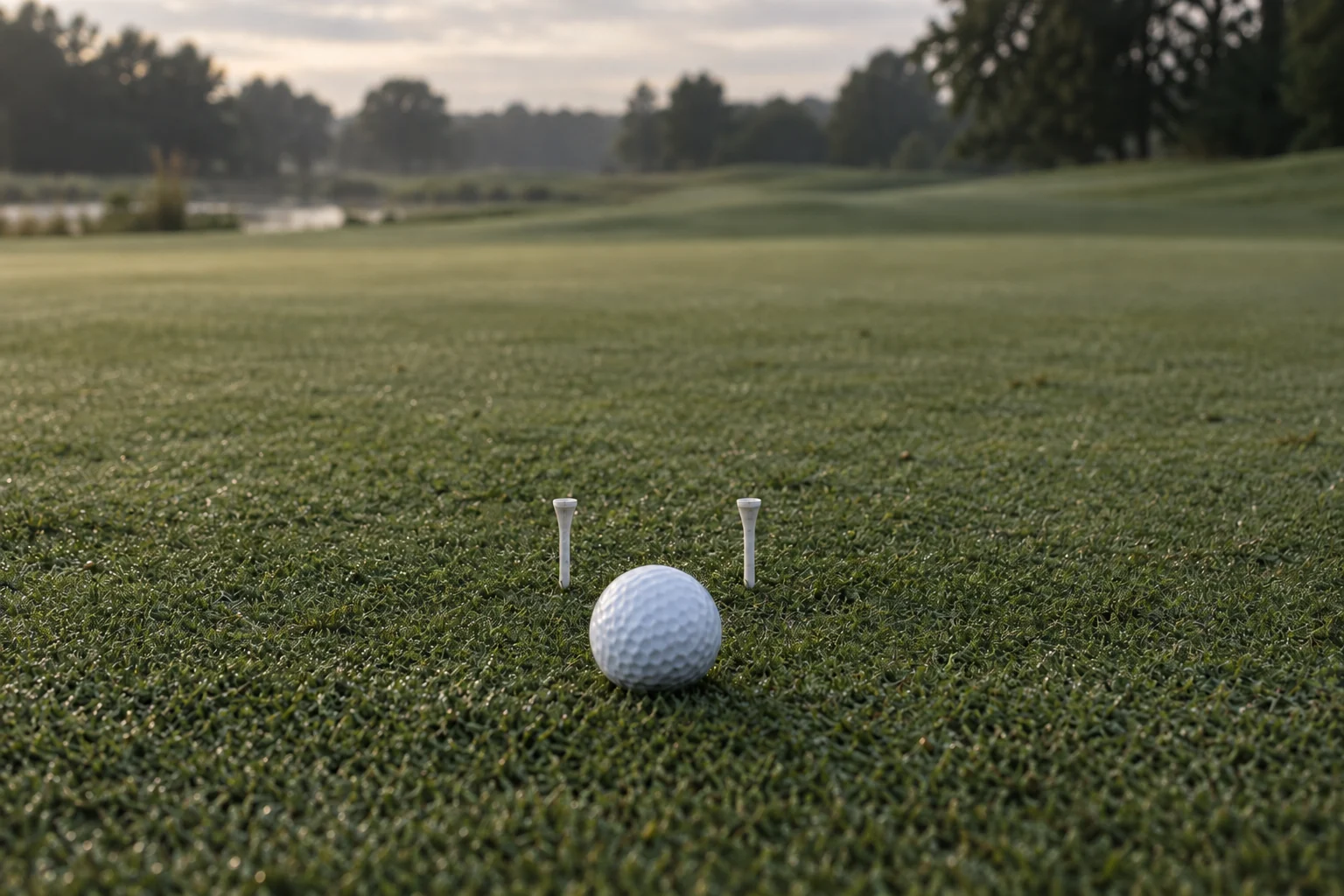
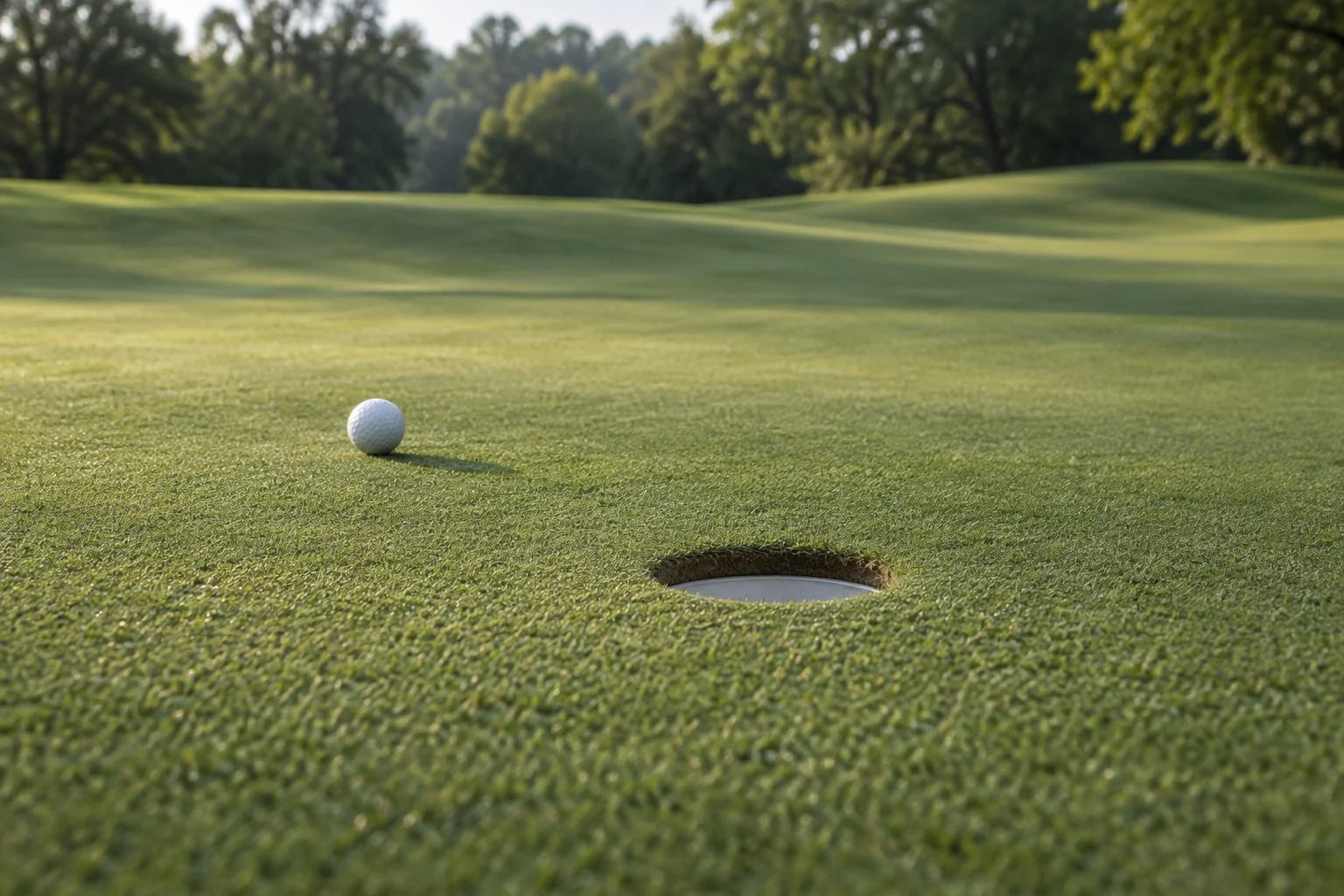
A putt can miss because of its start line, its pace, or the read. Training all three at once makes it hard to know what actually changed. A start-line gate removes two variables and gives you a simple answer: did the ball begin where you intended?
What you need
- A putter and five balls.
- Two tees or two flat ball markers.
- A straight putt of roughly 1.5 to 2 metres.
The hole is optional. The gate is the target.
Build the gate
Choose a straight section of the practice green. Place the ball, then build a gate 30 to 50 centimetres in front of it. Start with enough room for the ball to pass comfortably: approximately one ball plus a few millimetres on each side.
Begin with enough tolerance to create a reliable measurement. A severe gate can wait until the motion becomes repeatable.
The ten-putt protocol
- Pick the start line from behind the ball.
- Aim the putter and settle into your normal address.
- Roll the ball through the gate without changing your routine.
- Record only
LEFT,RIGHT, orTHROUGH. - Repeat for ten putts.
Ignore whether the ball finishes in the hole. A putt that passes through the gate has completed the task, even if your read or pace was wrong.
Once the start line is measurable, green reading and pace can be trained without asking one result to diagnose three different skills.
How to progress
Begin with a gate that produces six or seven successful starts out of ten. Once you can pass eight out of ten in two consecutive sets, narrow the gate slightly or move it farther from the ball. Change only one variable at a time.
If the misses repeatedly choose the same side, check alignment before changing the stroke. Move behind the ball, rebuild the gate, and confirm that the putter is aimed where you think it is.
What this drill teaches
The gate asks one question: did the ball start on the intended line? That limited measurement works with any putter and any stroke shape.
Keep the score small and specific. Ten measured putts are more useful than fifty putts hit without a question.
For a complete session, place this block inside the 20-minute putting practice routine.