Blade vs mallet putters: how to choose
Compare blade and mallet putters through geometry, mass distribution, MOI, alignment and the way each shape fits your aim and stroke.
Choose between a blade and a mallet by comparing how each putter aims, how stable it feels on your common strike and how clearly you sense the face. Head shape influences those traits. Your movement and setup complete the fit.
The useful comparison begins with geometry.
What separates a blade from a mallet?
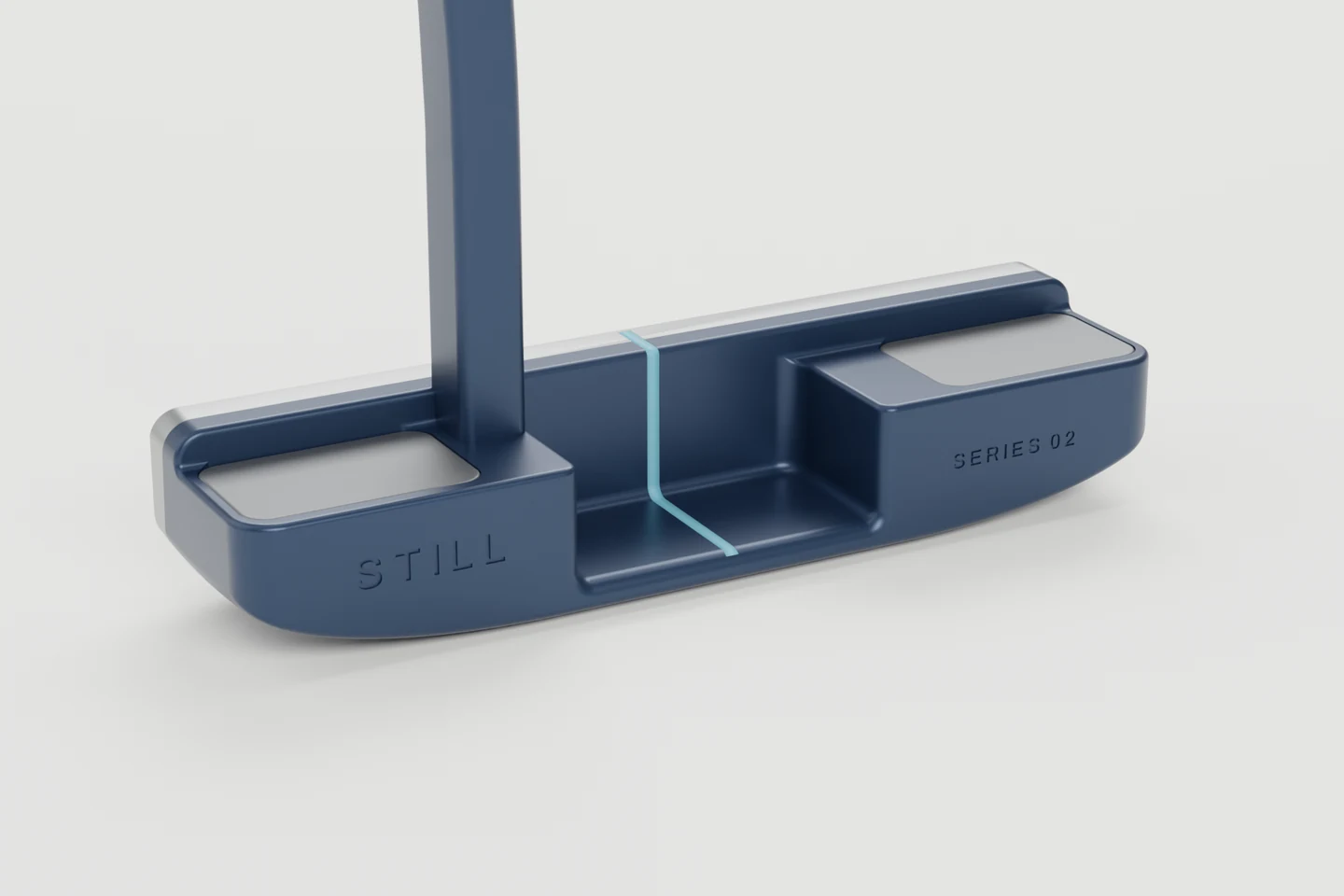
A blade has a relatively narrow body from face to back. Its mass sits closer to the face, often in a simple heel-to-toe shape. A mallet extends farther behind the face and gives the designer more space to position mass around the perimeter.
These categories cover a wide range. A wide blade can share properties with a compact mallet. Two heads with similar outlines can also behave differently because their cavities, weights, hosels and materials place mass in different locations.
Golf marketing often uses “blade” and “mallet” as visual labels. Engineering performance comes from dimensions, mass distribution and the assembled club.
Shape gives you a useful first category.
How does mass distribution affect MOI?
Moment of inertia, or MOI, describes resistance to angular acceleration around a specified axis. Moving a given amount of mass farther from that axis generally increases MOI. A deeper mallet gives a designer more room to do that, especially around the heel, toe and rear corners.
Higher MOI can reduce how much the head rotates from an off-centre impact. It can also limit the loss of ball speed across the face. The result depends on the relevant axis, impact location, face construction and total head properties.
“Forgiveness” is a loose golf-marketing term that may include MOI, speed retention, alignment help and even confidence. Those ideas need separate evaluation. Our guide to putter MOI covers the measurement and its limits in more detail.
A mallet often has higher MOI than a traditional blade. The outline alone provides no measured value.
Which shape offers better alignment?
Mallets can carry long sight lines, parallel rails, contrasting blocks or a shape that frames the ball. That extra visual information may help a player aim the face and see the intended start line.
Some players aim more accurately with less information. A blade’s short top line or single dot can make the face easier to sense without drawing attention toward the rear of the head. Visual preference can also change how far the player stands from the ball or where the ball appears in the stance.
Test aim before hitting putts. Set each putter toward a target from two metres, step away, and use a laser or a taut string to check where the face actually points. Repeat five times with each head.
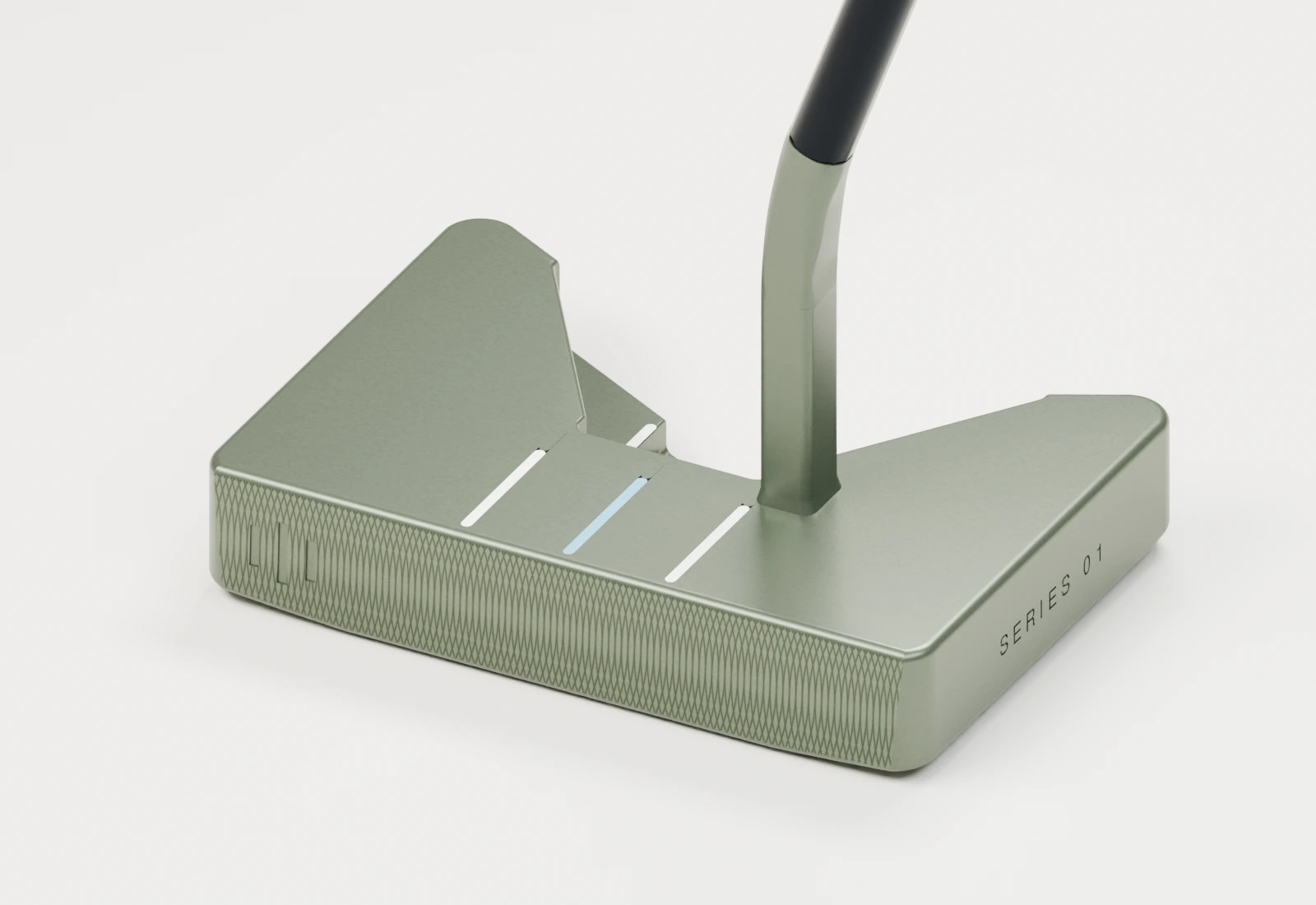
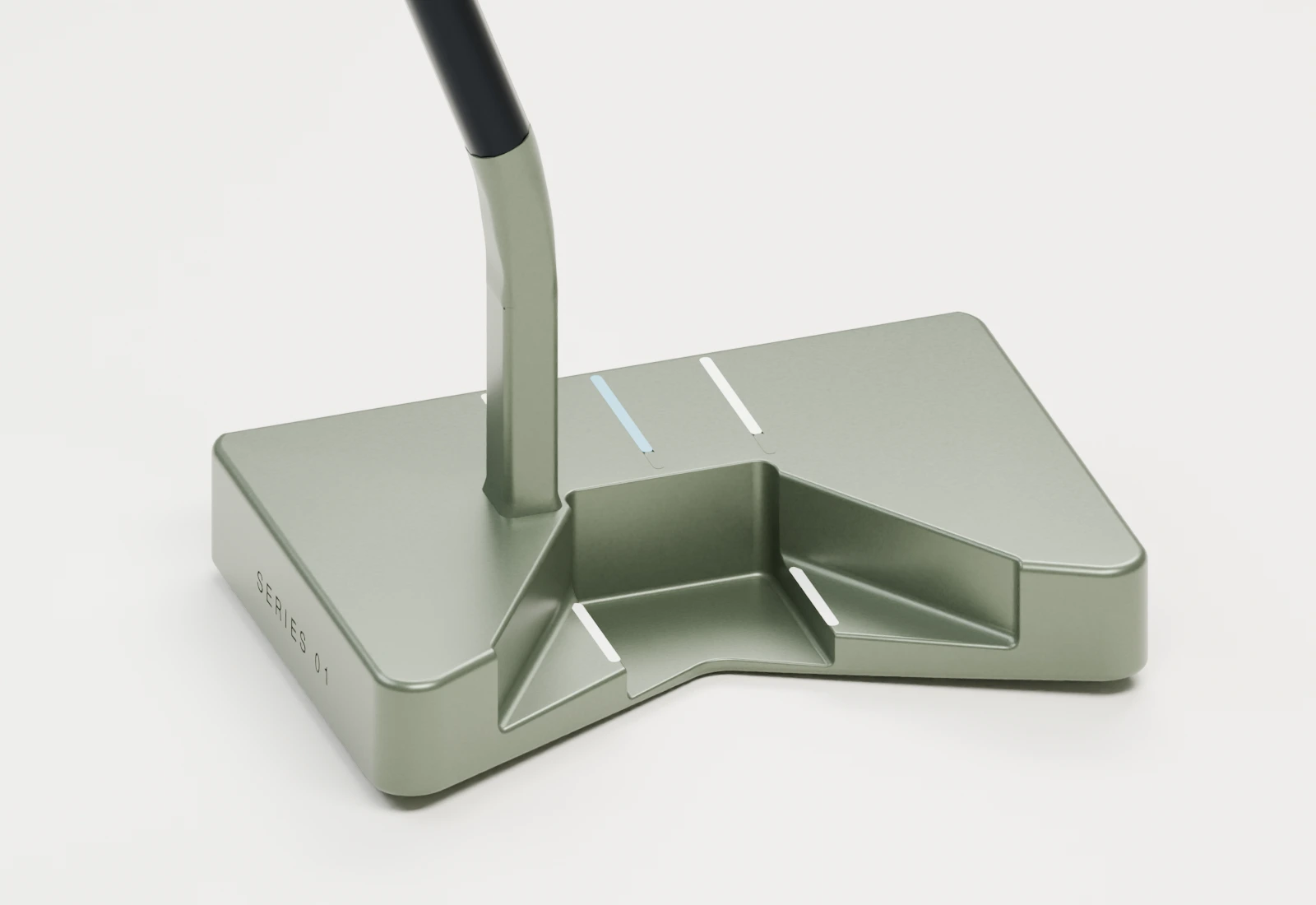
The gallery for Series 01 — Low Torque Putter shows one mallet layout from several angles, including at address. It lets you examine the head shape and alignment marks before a physical fitting can test aim and delivery.
The putter that looks square to you has a practical advantage. Measure that impression before trusting it.
Does a mallet suit a straight stroke and a blade suit an arc?
That shortcut ignores too many variables. Stroke shape emerges from posture, hand path, shaft angle, ball position and how the player moves. Head shape can influence the motion. The player determines how the system moves.
Hosel design and shaft position also change the head’s static balance. In common golf usage, a “face-balanced” putter points its face upward when the shaft is supported horizontally. A putter with “toe hang” allows the toe to fall by some angle. These labels describe a static orientation under gravity.
Dynamic behaviour includes the centre of gravity, shaft axis, inertial properties, speed and the forces applied by the golfer. The companion comparison of face-balanced, toe-hang and zero-torque putters explains where the labels help and where they become too broad.
Shaft-axis balance is another concept. Zero torque concerns the twisting moment created by the assembled club’s mass around the shaft axis. Evaluating it requires measurements beyond a blade or mallet silhouette.
Use balance labels as fitting information. Keep the stroke diagnosis attached to the player.
What can a blade tell you more clearly?
Many blades have a compact shape and less visual mass behind the ball. Some players find that this makes face orientation and strike location easier to feel. The response from a heel or toe strike may also be more obvious when the head has lower MOI.
That feedback can help during practice. It can also make a poor strike feel harsher or produce more variation in launch and speed. Insert material, face milling, head mass, ball construction and sound all contribute to the sensation.
“Feedback” is another broad term. Ask what you can actually identify: face angle, contact point, impact speed or sound.
Useful sensation leads to a specific observation.
What can a mallet make easier?
A mallet can provide a larger alignment canvas and more freedom to move mass away from the centre. Players with a wide strike pattern may see tighter outcomes when off-centre hits create less head rotation and retain more speed.
The larger footprint also changes perception. Some golfers feel the head tracks calmly. Others become too aware of the rear section and struggle to aim it.
Head weight deserves attention. A mallet can look heavy while matching a blade’s mass, and a blade can be built heavier than expected. Compare specifications or weigh the complete clubs before attributing feel to shape.
Visual size, physical mass and MOI are three different things.
How should you compare them on a green?
Use clubs with similar length, lie, loft and grip. Begin with five aim checks from the same location. Then roll ten straight putts through the start-line gate and record left, right or through.
Next, hit ten putts from six to eight metres. Record finish distance and strike location. A small piece of impact tape can help. Remove it before normal play.
Finish with breaking putts from three positions. Give each putter one attempt per position. This limits the advantage of learning the line with the second or third ball.
Look for a pattern across aim, start line, strike and pace. The best shape is the one that makes those four jobs easier to repeat with your normal setup.