How to choose the right putter length
A practical at-home process for choosing putter length through posture, eye line and sole position, including how 34 and 35 inches compare.
Choose a putter length that lets you address the ball with relaxed arms, a repeatable eye position and the sole sitting close to level. Test that position at home first. Then confirm it with a fitter who can check length, lie and loft together.
Height gives you a starting estimate. Arm length, hip bend, hand position and distance from the ball decide whether that estimate works.
What should the right length let you do?
Your setup should feel organised before the stroke starts. Bend from the hips, allow a small amount of knee flex and let the arms hang without reaching. The grip should meet your hands in that position.
Look for three things:
- Your elbows remain soft and clear of your sides.
- Your eyes sit over the ball or slightly inside its target line.
- The putter sole rests close to level, with neither edge visibly high.
Eye position affects how you see the line. A position far inside or outside can change the apparent relationship between the face, ball and target. Plenty of good players sit slightly inside the line. Aim for a position you can repeat.
The club should fit the setup you can return to under pressure.
How can you test putter length at home?
Wear the shoes you normally use for golf. Place a straight strip of painter’s tape on a level floor, then set a ball on that line. A putting mirror is useful, although a phone placed safely in front of you can also show eye and shoulder position.
Take your normal address without trying to make the putter fit. Hold the pose for five seconds. Check where your eyes sit, whether your arms hang freely and how the sole meets the floor.
Repeat the setup five times. Step away between attempts. A position that appears only after careful adjustment will be difficult to reproduce on the course.
To screen a shorter length, move your hands one inch down the grip and repeat. This changes the section of grip in your hands and shifts the club’s balance slightly, so it remains an approximation. It still reveals whether less length frees the arms or improves the view of the line.
For a longer option, compare with another putter or add a marked reference above the grip. Avoid extending the club with a loose object. The connection needs to be secure before you make a stroke.
Five honest setups tell you more than one carefully arranged photograph.
Should you use a 34-inch or 35-inch putter?
A 35-inch putter places the hands one inch higher when every other variable stays equal. That may suit a more upright posture, longer arms or a player who prefers to stand a little farther from the ball. A 34-inch putter may allow more hip bend and bring the eyes closer to the target line.
Those are tendencies. A tall player with long arms may fit 34 inches. A shorter player with an upright posture may fit 35.
Compare both at the same lie angle, head weight and grip where possible. Hit ten putts with each from a straight section of carpet or a practice green. Record setup comfort, strike location and whether the ball starts on the intended line. Alternate the order after five putts to balance the effect of a warmed-up stroke.
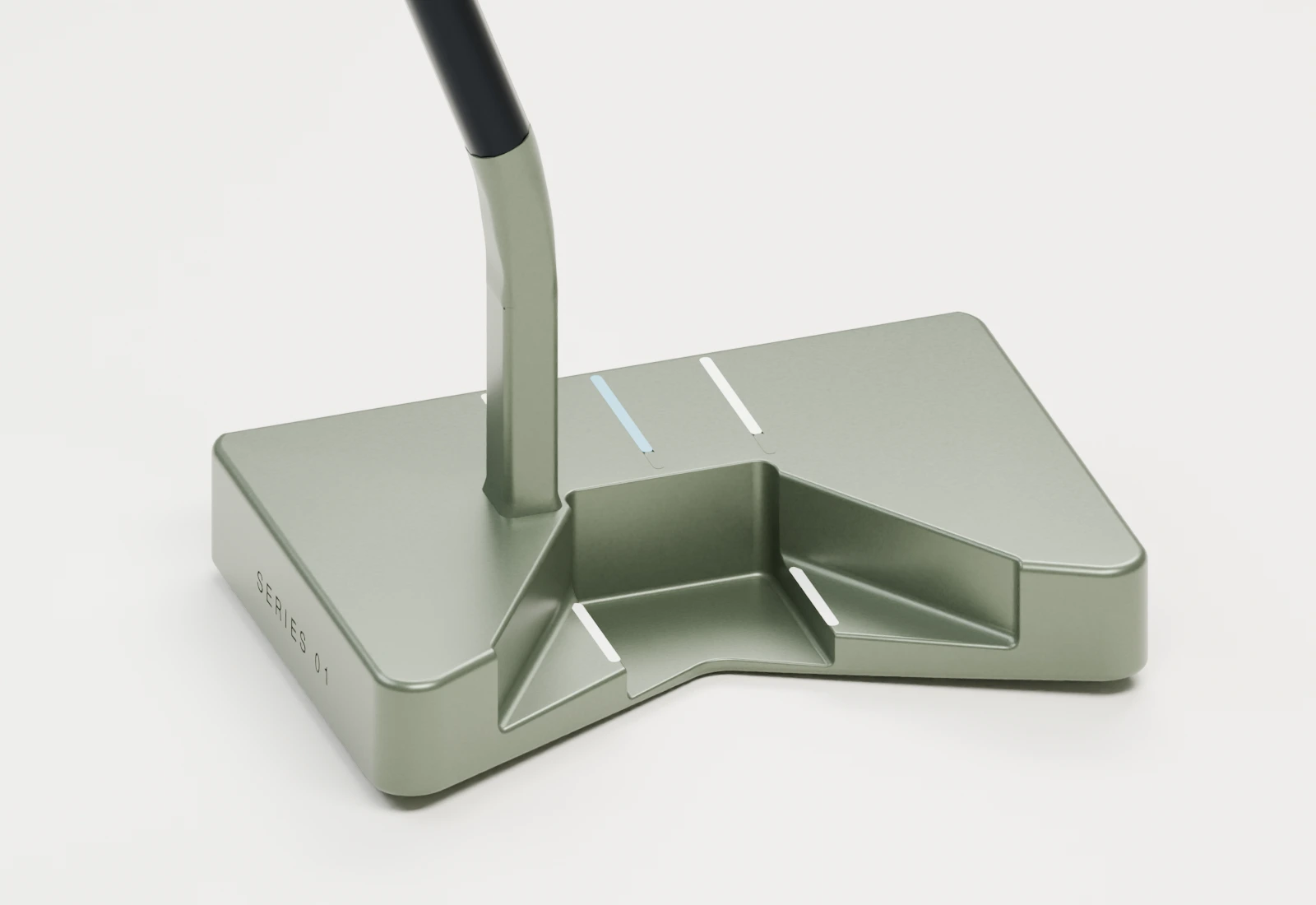
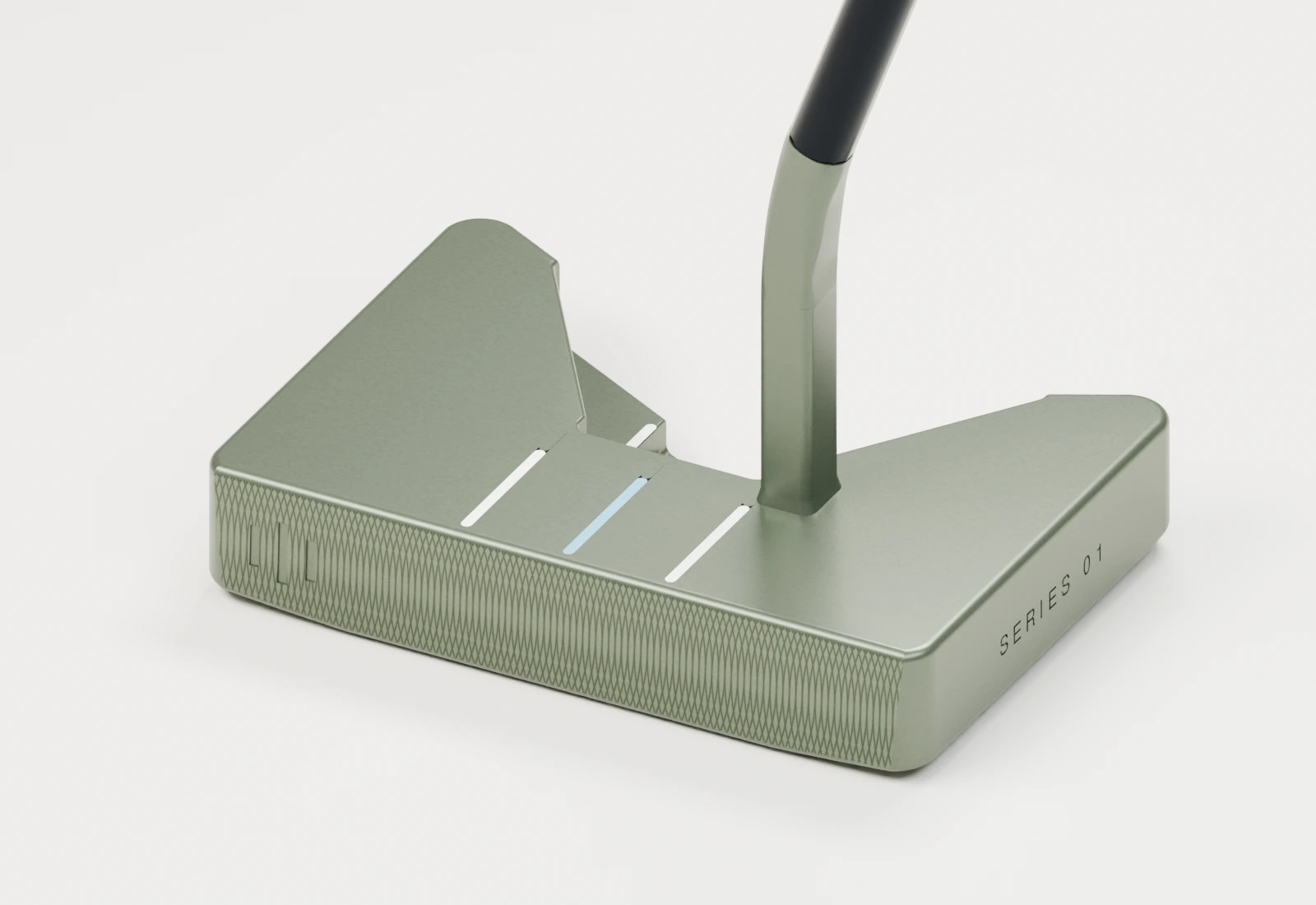
The planned 34- and 35-inch builds of Series 01 — Low Torque Putter give one example of those choices. Compare them with the posture you establish here; the launch specification remains subject to prototype validation.
One inch is small on a ruler. At address, it can move the hands, eyes and pressure through the feet enough to matter.
What are the signs that a putter is too long or too short?
A putter may be too long when the grip crowds the body, the elbows fold excessively or you stand more upright than feels natural. You may also find yourself holding the club well below the end of the grip every time.
A putter may be too short when you reach down for it, round the upper back or move the ball unusually close to the feet. Persistent tension through the neck and lower back also deserves attention.
Toe or heel lift needs a separate check. Length changes hand height, which changes how the sole presents at address. The club’s lie angle also controls that relationship. Our guide to putter lie angle explains why a raised toe or heel requires both dimensions to be checked.
Ball position can hide a poor fit for a few strokes. Repeated compensations reveal it.
What changes when you shorten a putter?
Cutting a shaft changes more than the number printed on the club. Total weight falls slightly. The balance point moves, and the measured swing weight usually drops unless head or grip mass changes. Your hands may also sit on a narrower section of a tapered grip.
That last detail matters. Grip dimensions and mass can alter hand pressure, face awareness and the club’s overall feel. Read how putter grip size affects the stroke before treating a lower hand position as a finished fitting solution.
Length, lie, loft, head mass and grip belong to one assembled club. Change one and recheck the others.
When should a professional fitter confirm the choice?
An at-home check can narrow the range. A fitting becomes valuable when two lengths feel plausible, the sole never sits cleanly, your strike pattern spreads across the face or your setup causes discomfort.
A useful fitting observes your natural posture first. The fitter can then measure eye position, hand height, impact location, face aim and the ball’s initial roll while adjusting length and lie. Ask to compare complete clubs and use a static wrist-to-floor chart as a starting reference.
Bring your current putter and describe any tendency you see on the course. A repeated pull, push or heel strike provides context for the fitter to investigate.
Start with the body. Let the club meet it there. Then verify the full assembly on a real green.