Putter grip size explained
How putter grip size, shape and weight affect hand action, face awareness and swing feel, with a practical fitting process.
Putter grip size changes how the fingers wrap around the club, how freely the wrists can move and how clearly the player senses the face. Grip shape and weight add two more variables. Choose them together, then test the complete putter.
A larger grip can quiet excess finger pressure for some players. A smaller profile can provide a clearer sense of face orientation. Neither response is universal.
How does grip size change the hands?
On a narrow grip, the fingers wrap farther around the handle. That can make small pressure changes easy to feel. It may also give the hands more freedom to close, open or twist during the stroke.
A larger grip fills more of the palms and reduces how far the fingers wrap. Some players respond with steadier pressure and less visible wrist action. Others lose awareness of the face or squeeze harder because the profile feels insecure.
Joint mobility, hand size and grip style all matter. A conventional reverse-overlap, left-hand-low hold and claw place pressure on different parts of the handle.
The useful question is simple: can you hold the face securely with light, repeatable pressure?
What does grip shape add beyond size?
Size describes dimensions. Shape describes where those dimensions sit around the handle.
A pistol-style grip usually has a more pronounced contour near the upper hand, often with a curved or flared rear section. It can help the top hand locate the handle and make face orientation easier to recognise.
Larger parallel profiles keep more consistent thickness down the grip. A broad flat front gives the thumbs a strong reference. Side flats or edges can give the palms another cue, although an edge that sits poorly in the hand may create local pressure.
“Oversize” has no single useful feel across every model. Two grips can have similar maximum width and very different depth, taper and weight.
Read the profile with your hands. The label gives only a category.
Can a larger grip stop wrist action?
A grip changes leverage, contact area and the player’s awareness of movement. Wrist motion remains available, and the stroke still comes from the person holding it.
If the face closes rapidly, a larger grip may reduce the urge to steer with the fingers. It may also mask face awareness and leave the same pattern in place. A start-line result is more useful than an impression alone.
Use the start-line gate drill with each grip. Ten putts will show whether the ball begins left, right or through the chosen window. Keep the putter, ball and gate unchanged.
Grip size can influence a pattern. A full diagnosis still needs setup, aim and impact information.
Why does grip weight matter?
Larger grips often weigh more, although size and mass are separate specifications. Foam, rubber density, internal structure and counterweights can produce large differences between grips with similar dimensions.
A heavier grip raises the total club weight and moves the balance point toward the hands. On a swing-weight scale, the reading usually falls. The head retains the same physical mass, yet it may feel less prominent during the stroke.
A lighter grip can make the head feel more present. Some players use that sensation to judge pace. Others prefer a heavier handle because the assembled club feels calmer through transition.
Swing weight is a scale reading based on how mass is distributed around a defined fulcrum. Golfers often use “swing feel” more loosely for every sensation during motion. Total weight, balance point, head inertia, tempo and grip pressure all contribute.
Compare exact grip weights. Size alone leaves balance unknown.
How does putter length interact with grip choice?
Length decides where the hands meet the grip and how the player stands to the ball. On a tapered model, moving the hands down can place them on a visibly narrower section. Cutting the shaft also changes total weight and balance.
That makes choking down a useful trial. It remains an approximation of a shorter build. Our guide to choosing putter length gives an at-home process based on posture, eye line and sole position.
Fit length first when the current posture feels forced. Then reassess the grip in that setup. A grip that feels excellent at 35 inches may sit differently in the hands after the club moves to 34.
The hands only tell the truth in the posture you plan to use.
What are the signs of a poor grip fit?
Watch for pressure that rises during the stroke, fingertips digging into the palms, a thumb searching for a flat surface or the handle shifting at transition. Repeated difficulty sensing whether the face is open or closed also matters.
Discomfort is a clear signal. Numbness, joint pain or the need to stretch the fingers between putts deserves a different size or profile, and persistent symptoms deserve medical advice.
Also separate grip fit from installation. A grip mounted a few degrees open or closed can make its flat surfaces disagree with the face. Check alignment before rejecting the shape.
A good grip should disappear from attention once the routine begins.
How should you fit a putter grip?
Choose three profiles with meaningfully different size or shape. Record each grip’s mass. Install them on comparable putters, or use a fitting system that keeps head, shaft, length and lie consistent.
For each grip:
- Take five unhurried address positions and rate hand comfort from one to five.
- Roll ten straight putts through a gate and record the start pattern.
- Roll five long putts and record the average finish distance from the target.
- Repeat the final five putts with mild consequence, such as restarting after two poor starts.
Give each option enough time for the unfamiliar shape to settle. Then look for low grip pressure, clear face awareness and stable results across start line and pace.
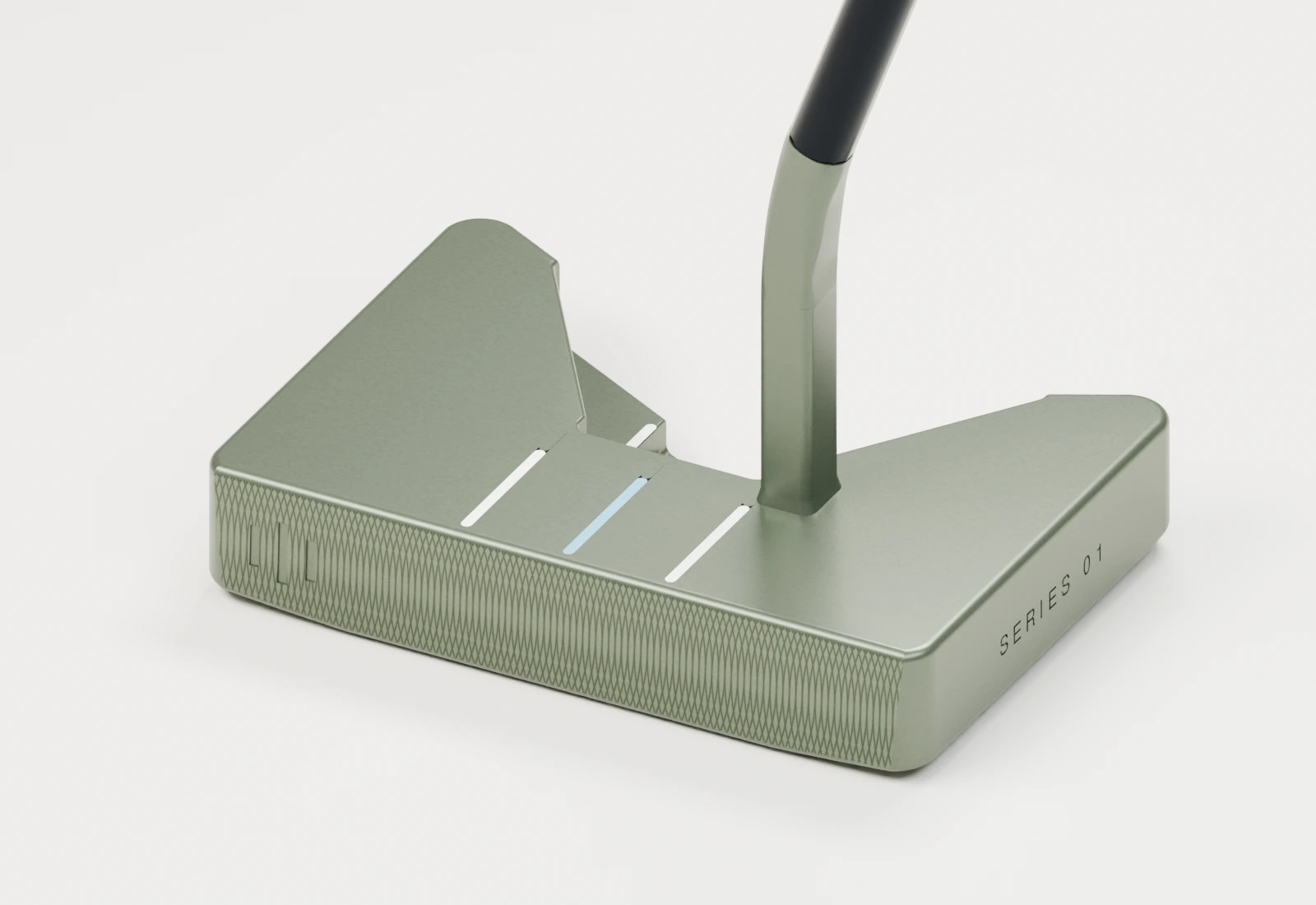
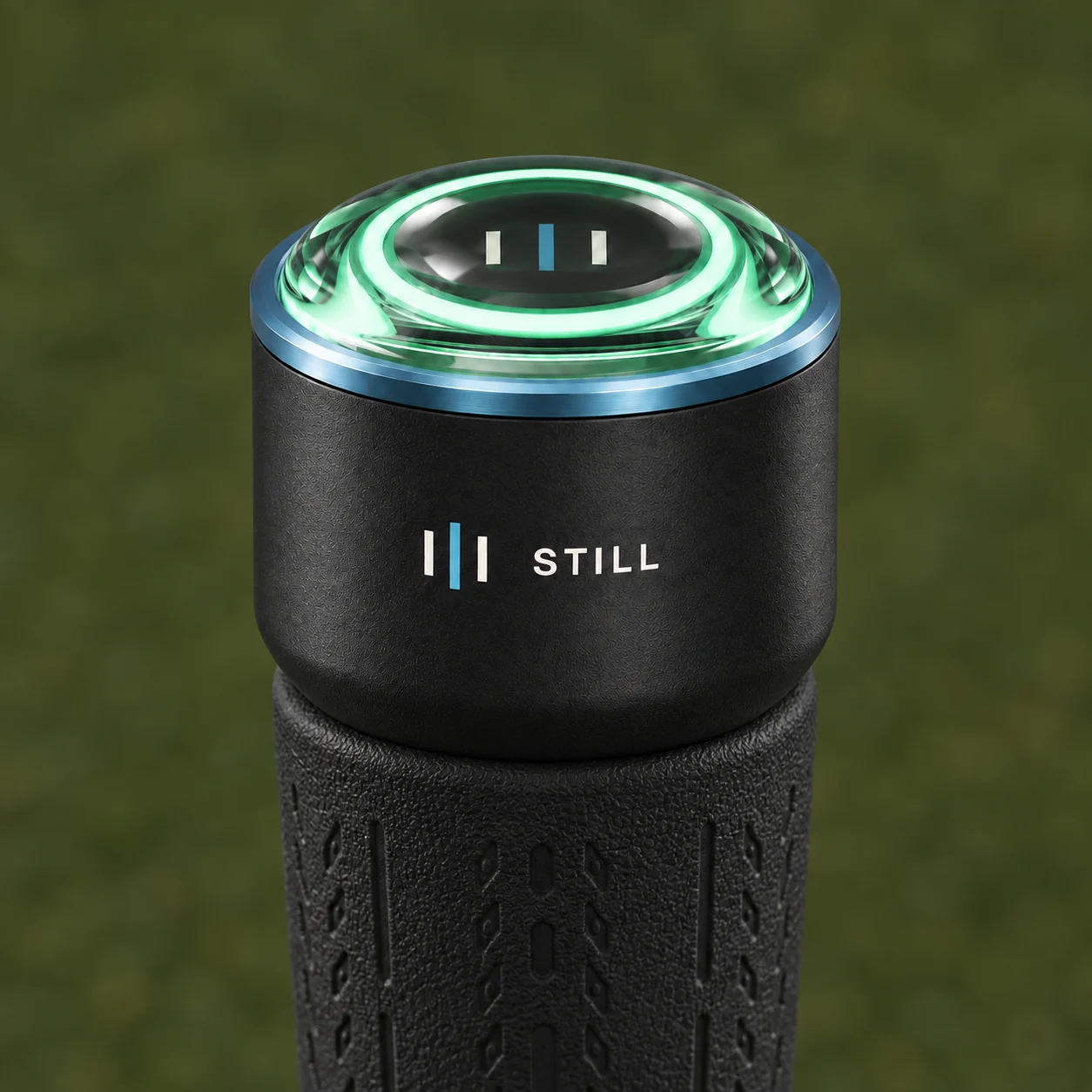
The Series 01 setup shows the STILL pistol-profile grip being developed for the putter. Apply the same comfort and start-line checks when a physical sample is available.
The final choice belongs to the assembled club. Size, shape and mass arrive as one feel in the hands.