Putter lie angle explained: address, impact, and fitting
Putter lie angle changes how the shaft, sole, and lofted face sit at address and impact. Learn toe-up and heel-up effects, setup causes, and fitting signs.
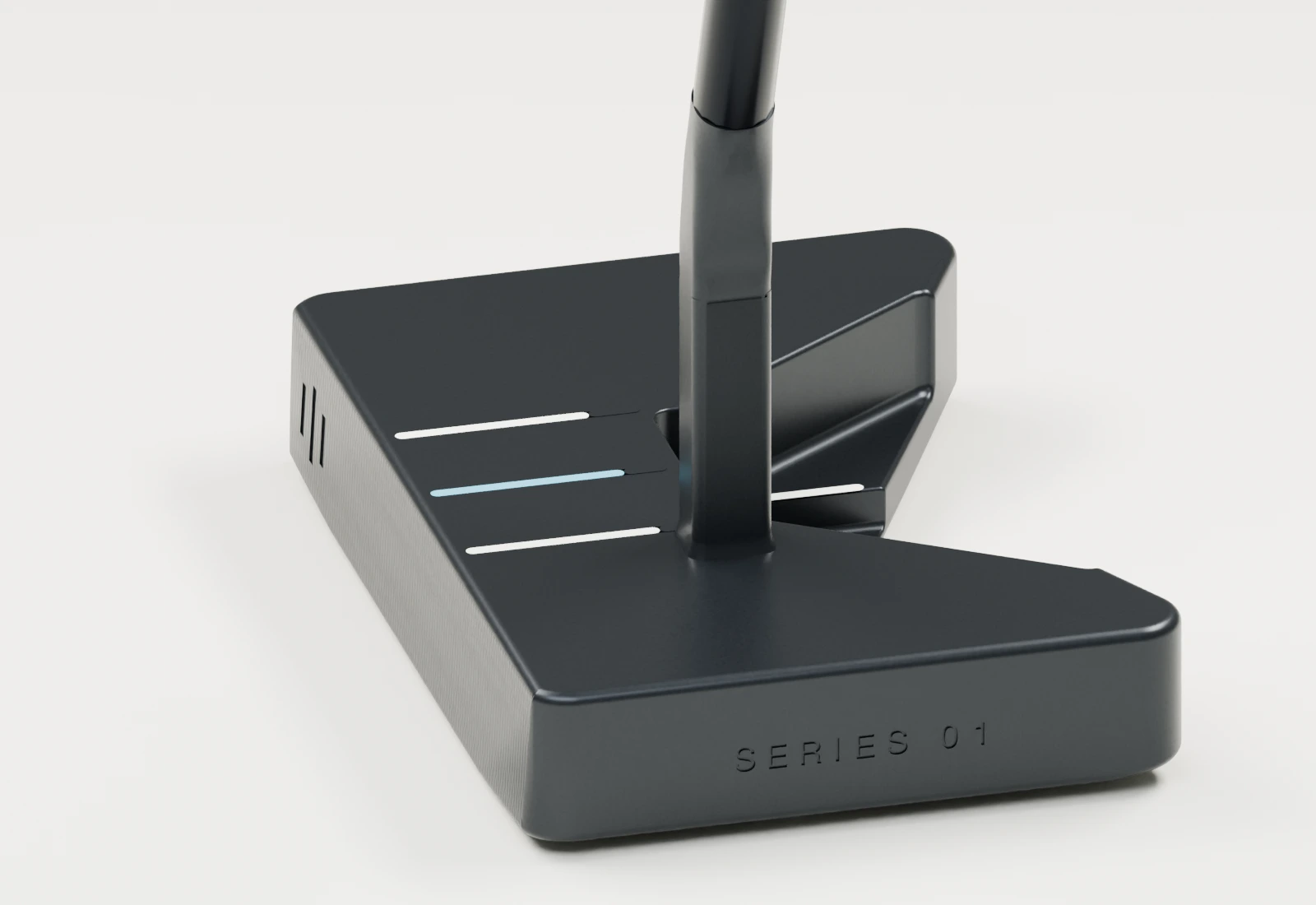
Putter lie angle describes the relationship between the shaft and the ground when the club is held in a defined position. It affects how the sole sits, where the hands fit around the body, and how the lofted face points when the toe or heel is raised.
The relevant condition is dynamic lie at impact. Address provides the starting evidence.
How is putter lie angle defined?
Lie angle is commonly measured between the shaft axis and the ground line, viewed from the target side. A more upright putter has a larger angle. A flatter putter has a smaller one.
The measurement needs a consistent face orientation and sole reference. Curved soles, shaft bends, and hosel geometry can otherwise create different readings from the same club.
Published lie is a build specification. It does not guarantee that the player will return the shaft at that angle.
The fixture defines the number. The golfer defines the delivery.
What changes when the toe sits up?
Toe-up means the shaft is delivered more upright than the head’s effective sole geometry, leaving the toe above the ground. The lofted face then tilts around the target line.
That tilt gives the face normal a sideways component. For a right-handed putter with positive loft, a toe-up condition tends to point that normal left of the intended line. The direction reverses for a left-handed putter.
The size of the effect depends on delivered loft and the amount of lie error. With zero loft, the geometric start-direction effect approaches zero. As loft or tilt increases, the sideways component grows.
Toe height becomes directional because the face has loft.
What changes when the heel sits up?
Heel-up means the putter is delivered flatter, with the toe lower than the heel. For a right-handed player, the lofted face tends to point its normal to the right. The direction again reverses for a left-handed player.
Sole contact can add another influence. If the raised or lowered edge catches the ground before impact, the head may rotate or change speed. The exact response depends on sole shape, turf, and the timing of contact.
A putter can also sit heel-up at address and arrive differently at impact. Wrist motion, handle height, and body movement can alter dynamic lie during the stroke.
Address is a clue. Impact is the event.
Does the sole need to sit perfectly flat?
A level sole is a useful fitting reference because it places the head near its intended geometry. Small visual gaps can be harmless when the sole has camber or rounded edges.
The ball only responds to the face and collision. A sole that appears level can still accompany a poor face angle, inconsistent strike, or unsuitable hand position. A visible toe-up condition can also produce acceptable results when the player repeats the delivery and the directional effect remains small.
The goal is a functional delivery with room for the stroke to move freely.
Sole appearance starts the conversation. Ball data finishes it.
How do posture and putter length interact with lie?
Putter length helps determine where the hands sit. A longer build often raises the hands and can make the delivered shaft more upright. A shorter build often lowers them and can flatten the delivery.
Posture can create the same changes. Standing closer to the ball, lifting the handle, or allowing the arms to hang in a different position all move the shaft plane. Distance from the ball and eye position may change at the same time.
This coupling makes isolated lie adjustments difficult. Bending the putter may level the sole while preserving a comfortable posture. Changing length can affect posture, swing weight, eye position, and lie together.
Fit length and lie as connected variables.
Can lie angle change aim at address?
Yes. A tilted head changes how the topline, flange, and alignment marks appear from the player’s eye position. Some golfers react by rotating the face until the visual picture looks level.
That compensation can be larger than the direct geometric effect of tilting a low-loft face. It also varies by head shape and alignment system, so a specification alone cannot predict it.
Test aim before the stroke begins. Then use a start-line gate or impact data to see how address and delivery combine.
Perception can move the face before mechanics get a chance.
What are the fitting signs of a lie mismatch?
Look for a toe or heel that sits consistently high in the player’s normal posture. Confirm the pattern at impact with face-on video, a calibrated fitting tool, or dynamic measurement.
Directional misses can support the diagnosis when they match the geometry and repeat across putts. They cannot identify lie angle on their own. Aim, face rotation, strike location, path, and green read can produce the same miss.
Also watch the player. Crowded hands, lifted shoulders, excessive reach, or a forced distance from the ball may show that length and lie are asking for an uncomfortable setup.
Repeated evidence matters more than one still frame.
Why is there no universal lie angle?
Golfers differ in height, arm length, posture, hand position, preferred eye line, and stroke motion. Putters differ in length, shaft entry, sole geometry, loft, and head shape.
One standard specification cannot organise all of those variables. A useful fit begins with the player’s comfortable setup, measures dynamic delivery, and adjusts the club within its safe bending or build limits.
Lie should also be checked alongside putter loft. The sideways face effect comes from their interaction, while loft delivery has its own influence on launch and early roll.
The right lie angle gives the player a repeatable face orientation from a natural setup.