Putter loft explained: static loft, dynamic loft, and roll
Putter loft influences launch, skid, and early roll. Learn the difference between static and dynamic loft, how setup changes delivery, and why fitting matters.
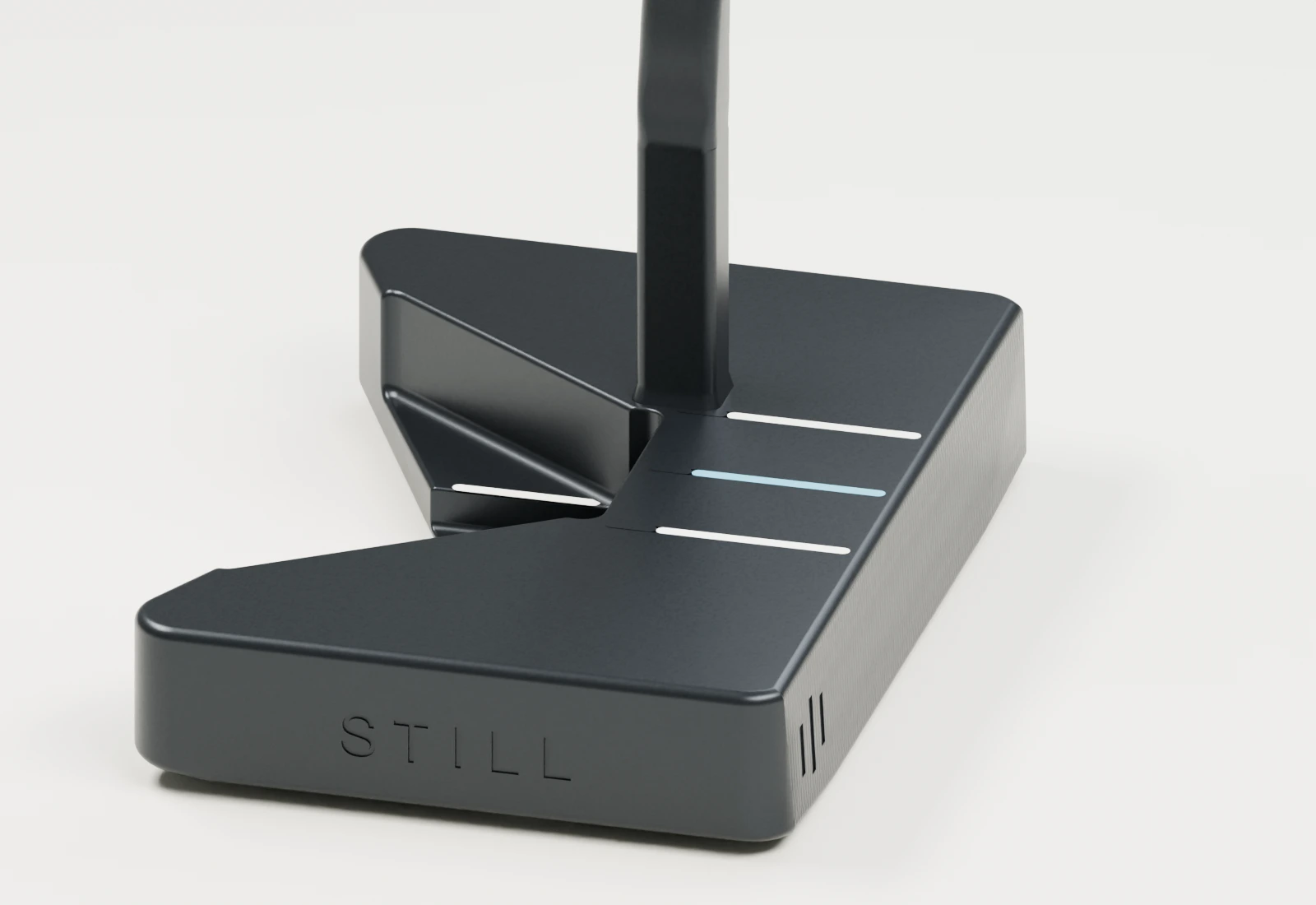
Putter loft is the backward tilt of the face that helps launch the ball out of its resting position on the green. Static loft belongs to the club at rest. Dynamic loft is the loft actually delivered at impact.
The ball responds to the second number.
What is static putter loft?
Static loft is the angle of the face relative to vertical when the club is placed in a defined measurement position. The fixture must control shaft position, lie angle, and face orientation for the result to be repeatable.
That detail matters because rotating a lofted face changes how its angle projects into different planes. A sole resting on a bench is a convenient reference, though sole shape and rocker can make the club sit differently from one setup to another.
Published loft gives a useful starting point. The build tolerance and measurement convention still belong beside it.
Static loft describes the tool before the stroke begins.
What is dynamic loft?
Dynamic loft is the effective loft of the face at the instant it contacts the ball. It combines the putter’s static loft with the player’s delivered shaft lean, face orientation, and dynamic lie.
Forward shaft lean generally reduces delivered loft. Hands behind the head generally add it. A head moving upward or downward can then change the launch conditions produced by that face angle.
Two golfers can use the same putter and deliver different dynamic loft. One golfer can also change delivery from putt to putt through setup or timing.
Impact owns the launch.
Why does the ball need to launch?
A golf ball rests slightly down in the grass. The first part of a putt has to move it out of that depression and across the surface.
Appropriate dynamic loft can help the ball leave cleanly. Excessive launch may produce a hop or repeated bouncing. Very low delivery can drive the ball into the turf, after which it may rebound before settling.
The ball can slide, skid, bounce, and rotate during this early phase. Pure roll begins when the contact point with the ground has no sliding speed relative to the surface. Grass interaction makes the real transition less tidy than a diagram.
Early motion sets up the rest of the putt.
Does more loft create better roll?
More loft creates a higher launch tendency under the same impact conditions. The quality of the result depends on the surface, ball, speed, strike, and delivered motion.
A smooth, tightly cut green may present the ball differently from a softer surface with a deeper resting depression. An uphill putt through a strong grain also asks a different question from a fast downhill putt on fine turf.
This is why a universal ideal loft prescription is unreliable. Static loft alone cannot account for the player’s shaft lean or the conditions under the ball.
The target is a useful launch window for the player and surface being tested.
How does setup change delivered loft?
Hand position is the most direct influence. Moving the hands towards the target adds forward shaft lean and reduces dynamic loft. Moving them away tends to increase it.
Ball position changes where impact occurs relative to the stroke’s low point. A ball farther forward may be contacted as the head rises, though the player’s hand position and release can alter that outcome. A ball farther back often moves impact towards a descending part of the motion.
Posture and putter length influence where the hands settle. Grip style can shift them too. A setup change that looks small may move several impact variables together.
Change one input and measure the delivery again.
What role does lie angle play?
Loft points in the direction of the face plane. When the toe or heel is raised, some of that loft projects sideways, changing the horizontal direction of the face normal.
The directional effect is modest with a low-loft putter, yet it grows with more loft and more lie error. It can sit beside aim and stroke delivery as another source of start-line variation.
Putter lie angle explained covers the geometry, posture, and fitting signs in detail.
Loft and lie meet at the same face.
What does poor loft delivery look like?
A visible hop immediately after impact can point towards excessive launch, turf contact, or a downward strike followed by rebound. A ball that appears pressed into the grass may indicate too little delivered loft or an impact point that is too low on the face.
Neither observation diagnoses the cause by itself. Slow-motion video or a putting launch monitor can separate launch angle, rise angle, skid, and strike location. Repeating the measurement across several putts reveals whether the pattern is stable.
Start direction needs its own check. The start-line gate drill isolates that outcome from read and pace.
Watch the first few centimetres. They contain the useful evidence.
Why does putter fitting matter for loft?
A fitting can measure the player’s normal delivery, adjust static loft, and observe the resulting launch. That connects the club specification to the impact the golfer actually creates.
Useful testing includes the player’s usual ball position and hand position. It also uses a representative surface where possible. A change that improves one strike in a controlled bay still needs to repeat across a set of putts.
The fitted loft is the value that gives that player a reliable launch without forcing an unfamiliar setup.