What is torque in a putter?
Torque is the turning effect created when a force acts away from an axis. Here is what creates it in a putter and how it differs from shaft torque and MOI.
Torque is a turning effect. In a putter, it appears when a force acts at a distance from the axis around which the club can rotate.
That force may come from gravity, the player’s acceleration of the club, or an off-centre strike. The size of the effect depends on the force, the distance to the axis, and the direction in which the force acts.
Golf language makes this harder than it needs to be. “Torque” may refer to head balance, a shaft specification, or the twisting caused by impact. Those uses describe related physics under different conditions.
What does torque measure?
Engineers also call torque a moment. The definition of torque in OpenStax University Physics expresses its magnitude as force multiplied by perpendicular lever arm. Its SI unit is the newton metre, written N m.
Imagine pushing a door near its hinge. Then apply the same force at the handle. The second push creates more torque because the lever arm is longer.
A putter follows the same rule. If the centre of gravity sits away from the shaft axis, the head’s weight has a lever arm around that axis. Gravity can then encourage the head to rotate when the club is free to move.
Distance gives force its turning leverage.
What creates torque during a putting stroke?
Several torques can act on an assembled putter at once.
Gravity acts through the club’s centre of gravity. The hands apply forces through the grip and shaft. As the player starts, stops, or changes direction, the distributed mass of the head resists that angular acceleration. Air resistance and shaft deformation exist too, though their influence is usually secondary at putting speed.
Impact adds another event. A strike away from the head’s centre of gravity creates a moment around the head. A heel strike and a toe strike apply that moment in opposite directions.
The club therefore has no single torque for an entire stroke. Torque changes with the force, geometry, club orientation, and time.
Context defines the number.
What does “zero torque” mean in putter design?
In putter marketing, zero torque is used loosely. It usually describes a balance condition in which the head creates very little gravitational moment around the shaft axis when the assembled club is supported in a defined test position.
Designers pursue that condition by bringing the centre of gravity onto, or very close to, the relevant shaft axis. Hosel geometry, shaft location, head mass, grip, and every fitted component can affect the final balance.
Player input can still create torque through the hands. An off-centre collision can still twist the head. A change in acceleration can still create an inertial response.
What zero torque changes explains the playing implications and the need to validate the finished assembly.
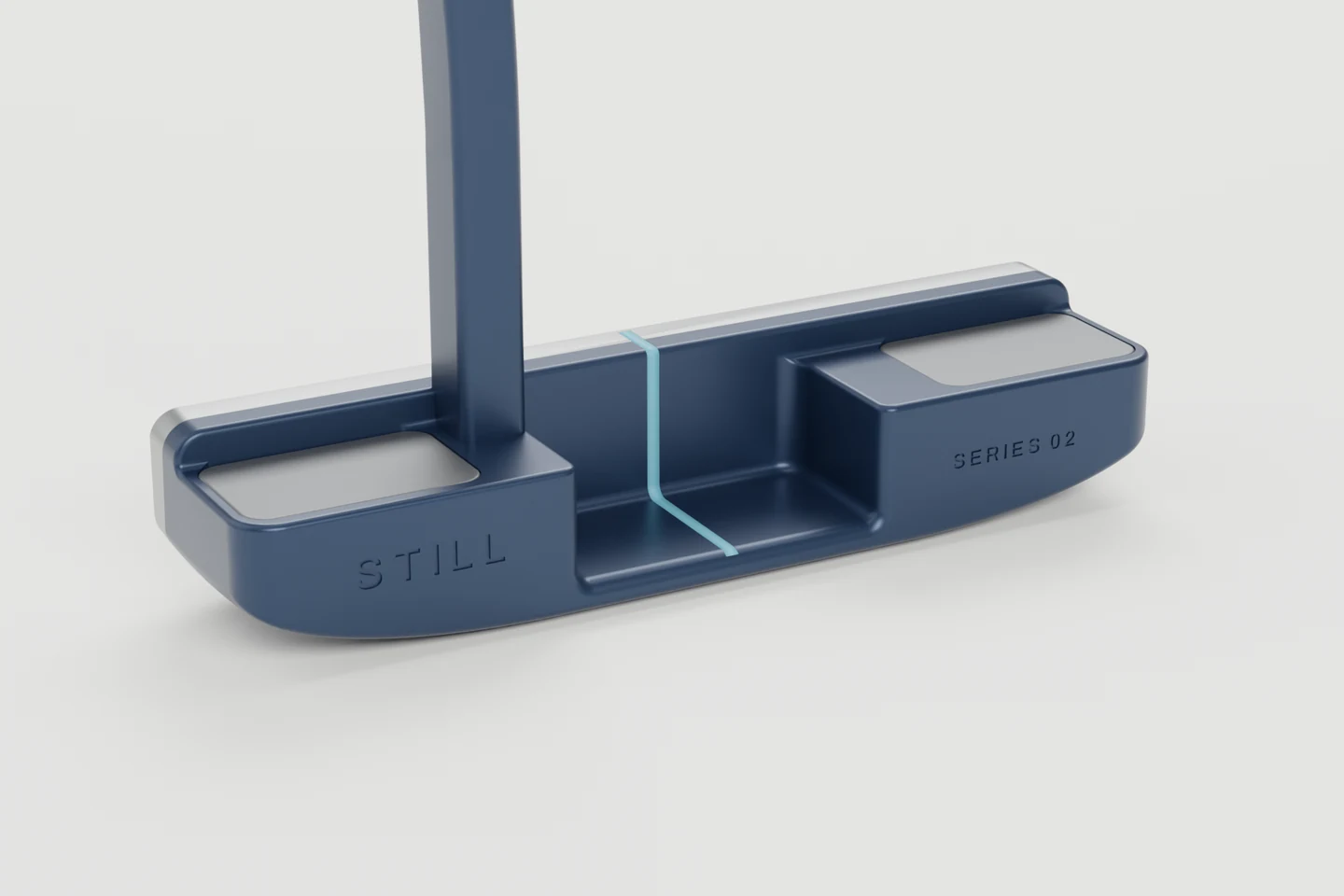
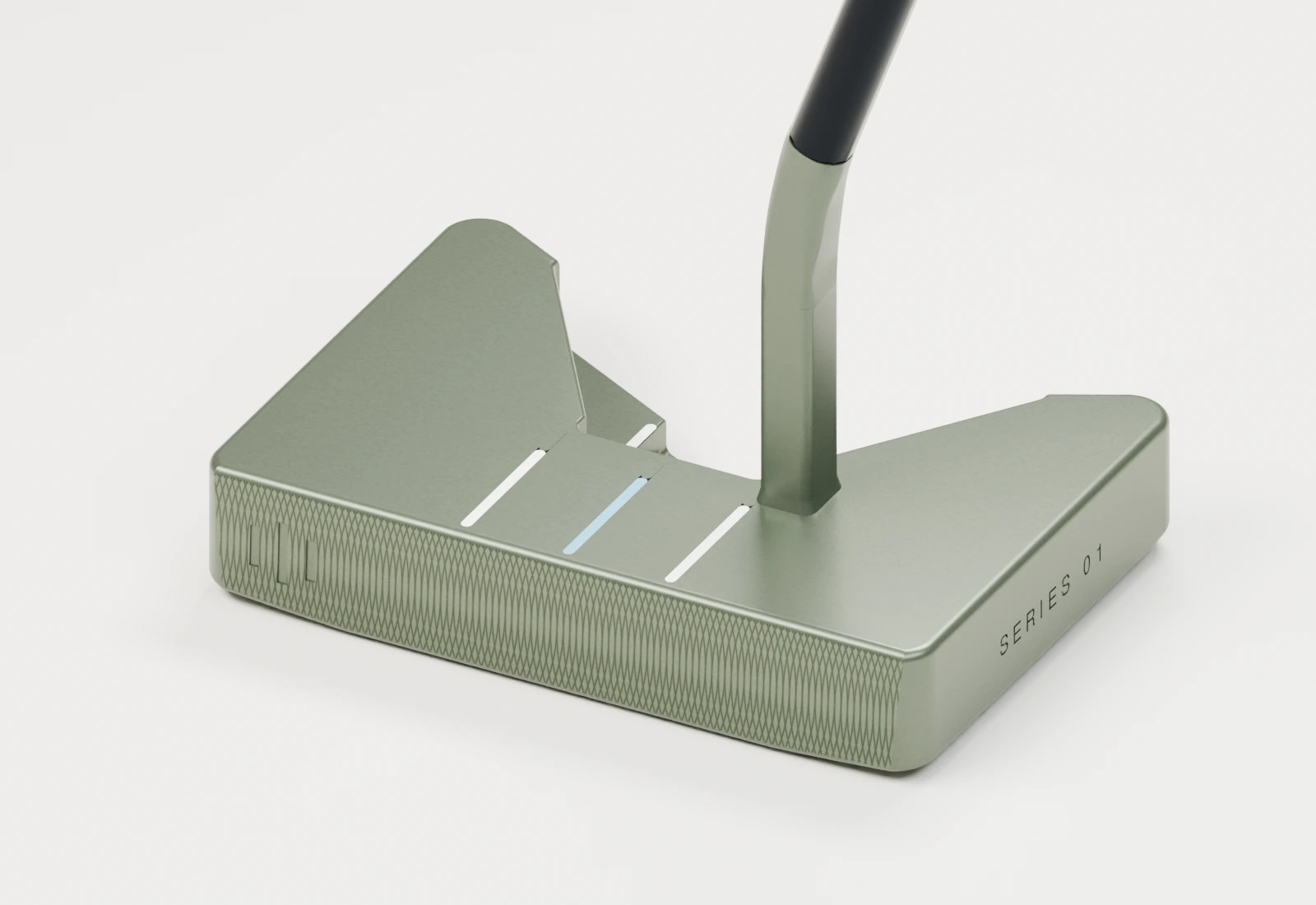
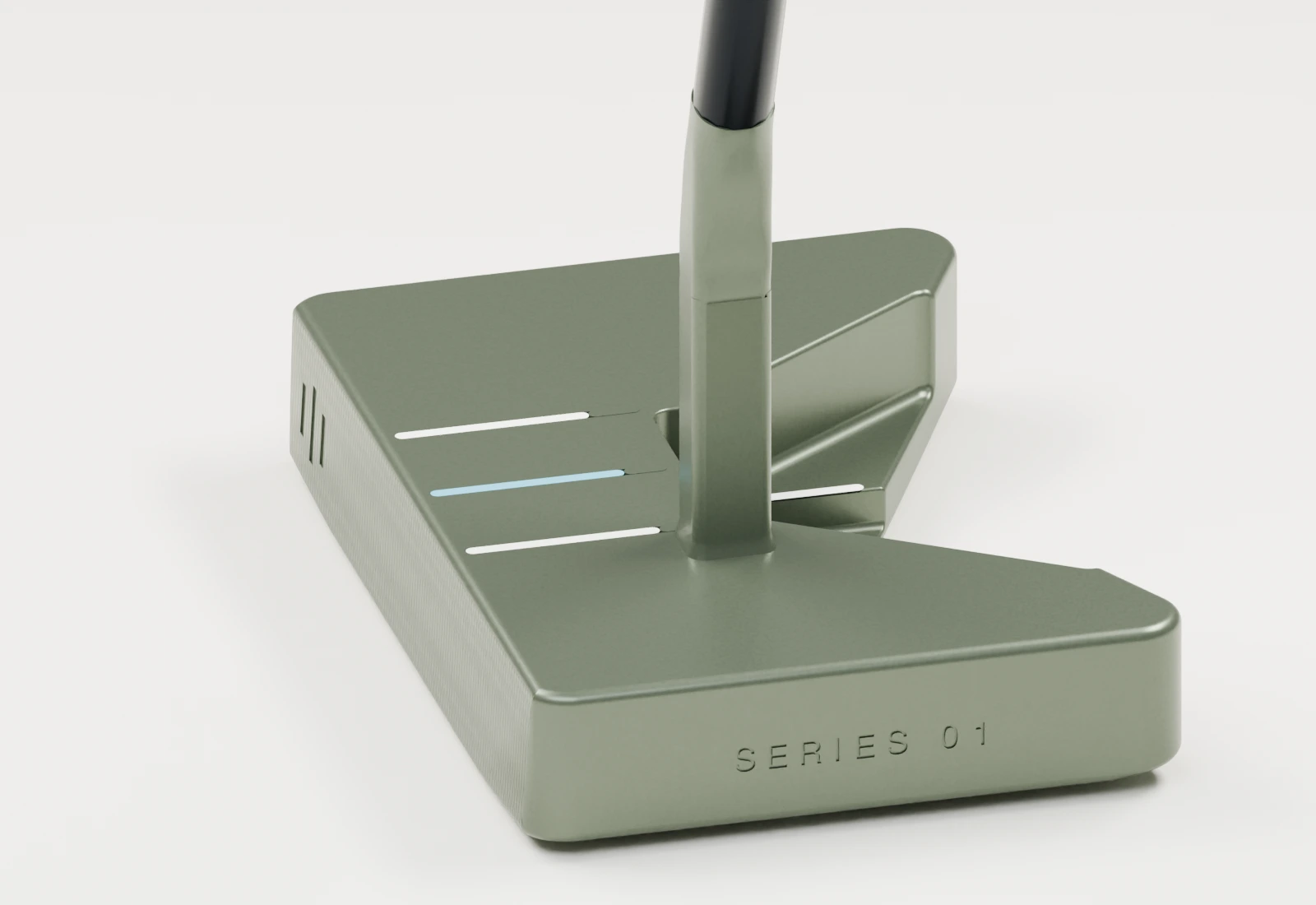
The STILL technology page illustrates the shaft-axis and centre-of-gravity relationship used in our design. The geometry explains the target; physical testing must establish the finished club’s residual torque.
The useful claim is narrow: low residual torque around a stated axis, under a stated condition.
Is putter torque the same as a shaft torque rating?
A shaft torque rating describes how much the shaft twists under a specified torsional load. It is commonly expressed in degrees.
That rating belongs to the shaft and its test method. A lower degree value generally indicates greater torsional stiffness within the same measurement system. Comparison becomes unreliable when manufacturers use different loads, clamp lengths, or procedures.
Head-balance torque is a moment, commonly expressed in N m or another force-distance unit. Shaft torque rating is an angular deflection under load. One describes the load; the other describes a component’s response to a test load.
The shared word hides two different measurements.
How is torque different from MOI?
Torque causes angular acceleration. Moment of inertia, or MOI, describes how strongly an object’s mass distribution resists that angular acceleration around a stated axis.
For a given impact torque, a head with more MOI around the relevant axis will experience less angular acceleration. The relationship is the rotational equivalent of force, mass, and acceleration.
This means two putters can experience the same torque and respond differently. It also means one head can have low gravitational torque around the shaft axis and a separate MOI value around a vertical axis through its centre of gravity.
What MOI means in a putter covers those axes, units, and off-centre strikes in more detail.
Torque is the turning input. MOI shapes the rotational response.
What should a golfer take from the term?
Ask which force and which axis a torque claim refers to. Then ask how the assembled putter was supported or loaded.
For head balance, the practical question is whether the club has a strong passive tendency to rotate in the player’s hands. For impact stability, strike location and MOI become more relevant. For shaft feel, the shaft’s torsional stiffness and the manufacturer’s test method matter.
Those are separate questions. A clear specification should keep them separate too.